FEEDSTOCK TO ENERGY
Feedstock Goes In. Fuel, Power, and Revenue Come Out.
White Lion’s Feedstock to Energy pathway converts approved inputs — including biomass, plastics, tires, and other feedstock streams — into alternative diesel, clean electricity, syngas, carbon products, and verified credit opportunities through a Carbon-Negative Distributed Hydrocarbon Refinery model.

THE PROCESS
Proven Technology. Straightforward Process.
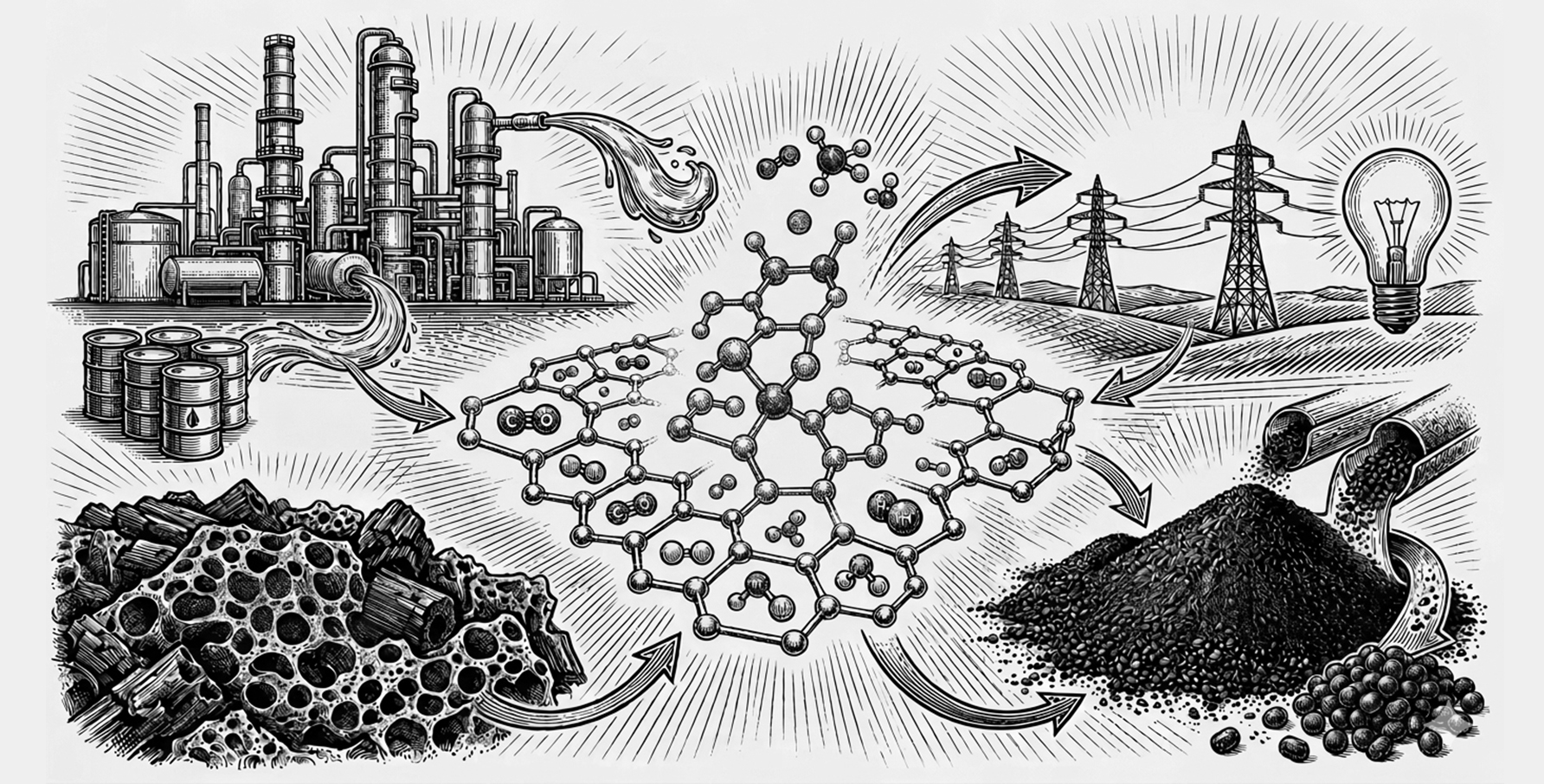
White Lion’s Carbon-Negative Distributed Hydrocarbon Refinery operates through controlled thermal decomposition in an oxygen-free environment — no combustion, no open burning, and no uncontrolled emissions. The system is designed to extract maximum value from materials industries currently pay to dispose of, including biomass, plastics, tires, and other approved feedstock streams.
What goes in: Biomass, plastics, scrap tires, wood waste, sawdust, agricultural residue, crop residue, corn stalks, wheat straw, leaves, grass clippings, algae, animal manure, food waste, sugarcane bagasse, coconut husks, rice husks, peanut shells, cotton waste, sewage sludge, yard waste, and other approved feedstocks.
What comes out: Alternative diesel. Syngas. Electricity. Carbon black. Biochar. Graphite. Graphene. Activated carbon. Advanced carbon materials. RIN credit opportunities. Carbon capture credit opportunities.
The system is designed to process between 3 and 150 tons of feedstock per day depending on configuration, operating in continuous 60-day production cycles with an estimated design life of 15 to 20 years.
THE OUTPUTS
Multiple Revenue Streams. One Operating Asset.
Alternative Diesel — produced from approved feedstocks and suitable for trucks, marine vessels, generators, and industrial equipment.
Clean Electricity — generated on site from feedstock-derived energy, supporting data centers, industrial facilities, and remote or island communities.
Syngas — combustible gas fraction reused to support reactor heat after startup, improving operating efficiency.
Carbon Black — produced from tire and plastic feedstocks and sold into asphalt, rubber, plastics, and advanced material markets.
Biochar — produced from plant-based feedstocks and positioned for agricultural amendment, soil restoration, and carbon capture credit opportunities.
Graphite — refined carbon output that serves as a higher-value material pathway.
Graphene — advanced carbon material with commercial applications across batteries, electronics, composites, coatings, and industrial manufacturing.
Activated Carbon — high-value carbon product used in filtration, purification, environmental, and industrial applications.
Renewable Identification Number Credits — available where qualifying fuel production meets applicable program requirements.
Carbon Capture Credits — available where qualifying carbon stabilization and registry requirements are met.
WHO THIS IS FOR
Are We The Right Fit?
AI Infrastructure and Data Centers On-site power at commercial scale. Generated from feedstock. Clean credentials that meet the most demanding ESG requirements.
Industrial Manufacturers Turn a disposal cost into a revenue line. Fuel, power, carbon products, and credits — from biomass your operation already generates.
Remote and Island Communities Local biomass as local energy. Full power independence without grid infrastructure.
Project Developers and Investors Seven revenue streams. Proven technology. 15 to 20 year asset life. Scalable by replication. Carbon credits registered from day one.

The Platform Is Built. The Window Is Open.
White Lion Energy Group is at an inflection point — technology proven, market positioned, and infrastructure ready to scale. The question is not whether this opportunity is real. The numbers, the science, and the market trajectory answer that clearly.
We would like to have that conversation with you. Reach out and let’s connect!